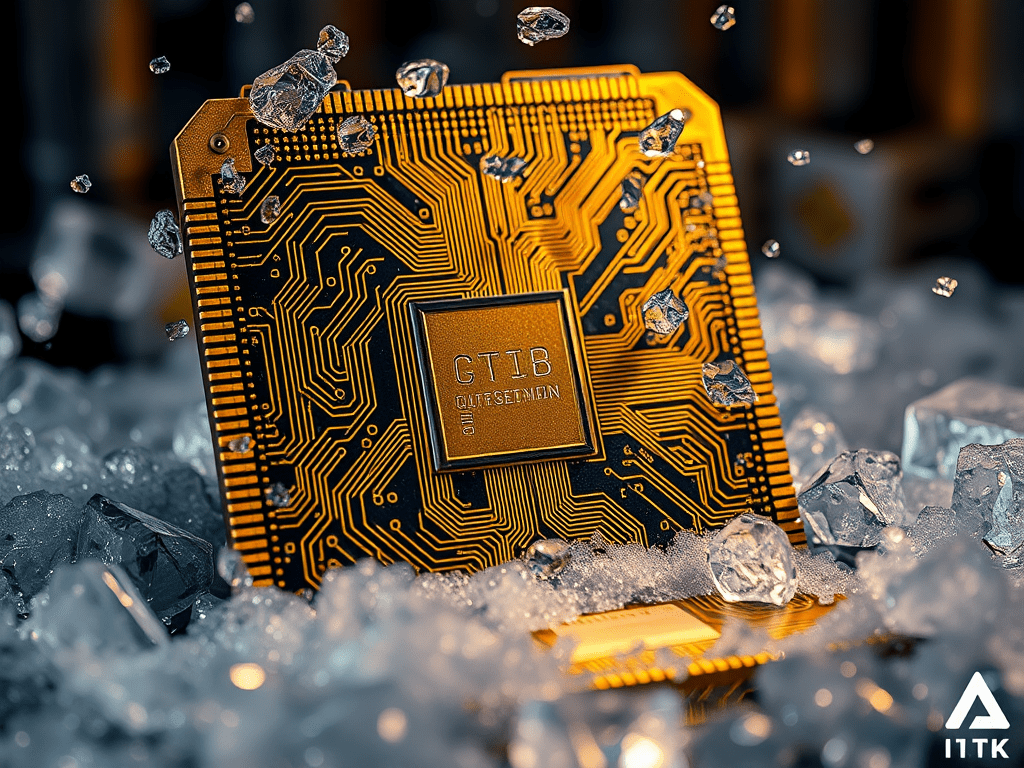
Beyond Qubits: Why 2026 is the Year of “Quantum Utility”
For a decade, quantum computing headlines were dominated by a meaningless numbers game: “Company X hits 100 qubits,” “Company Y hits 1,000 qubits.” To the business world, this was noise. It felt like a perpetual science project.
But in 2026, the narrative has quietly shifted from “Supremacy” to “Utility.” We are no longer asking “Can a quantum computer beat a supercomputer?” We are asking “Can it do useful work that generates revenue today?”
The answer is finally yes. Here is how the Quantum era is impacting real-world industries right now.
1. The End of “Noise”: Logical Qubits
The biggest barrier to quantum adoption was stability. A tiny vibration or temperature shift could cause a calculation error (decoherence). It was like trying to do complex math on a calculator that randomly changes numbers every few seconds.
The breakthrough of 2026 is the commercialization of Logical Qubits. By grouping multiple physical qubits together to error-correct each other, companies like IBM and Quantinuum have created stable processors.
- Impact: This reliability allows for long-running calculations needed for material science, not just split-second experiments.
2. The Killer App: Next-Gen Batteries & Pharma
Where is the money flowing? Simulation. Classical computers are terrible at simulating nature (chemistry/physics) because molecules interact in quantum states. Quantum computers speak the language of nature natively.
- EV Batteries: Auto giants are using quantum processors to model lithium-sulfur interactions, aiming to double battery density by 2028.
- Drug Discovery: Pharma companies are simulating protein folding in weeks instead of years, drastically cutting the cost of R&D for new medicines.
3. The “Q-Day” Threat: Is Encryption Dead?
There is a dark side to this progress. If quantum computers become powerful enough, they will crack RSA encryption—the lock that protects every bank account and email on Earth. This event is known as “Q-Day.”
While a full break isn’t expected until 2030, the threat is affecting decisions today due to “Harvest Now, Decrypt Later” attacks. Hackers are stealing encrypted data now, waiting for a quantum computer to unlock it later.
- The Defense: This year, businesses are migrating to PQC (Post-Quantum Cryptography) standards approved by NIST. If your cloud provider isn’t PQC-ready, your data is already vulnerable.
4. The Future is Hybrid
Don’t expect a “Quantum Laptop” on your desk. The future is Hybrid Computing. Just as your PC offloads graphics to a GPU, 2026’s cloud architecture offloads specific impossibly hard problems to a Quantum Processing Unit (QPU) via the cloud, while the CPU handles the rest.
The seamless integration of QPU into AWS and Azure means you might be using quantum power soon without even realizing it.
👇 Read More
🔗 The “Q-Day” Clock is Ticking: Why You Need Post-Quantum Cryptography Now (Click)
Leave a Reply