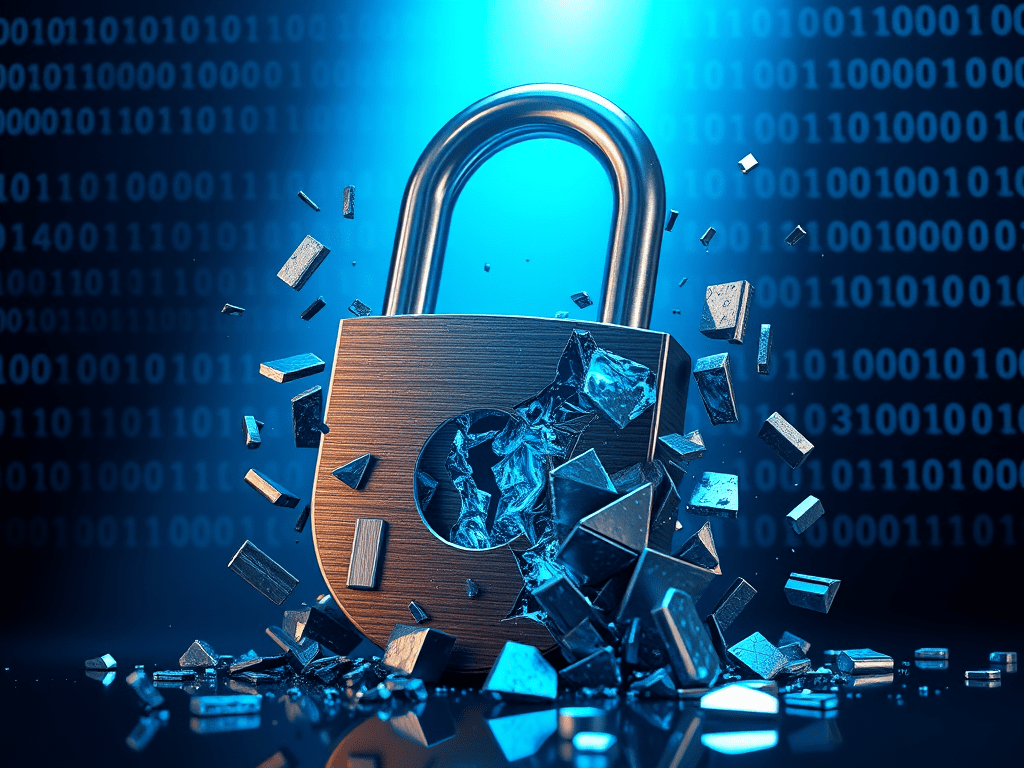
The “Q-Day” Clock is Ticking: Why You Need Post-Quantum Cryptography Now
Most people think Quantum Computing is a problem for the year 2030. They are wrong. The threat is active today.
It’s called “Harvest Now, Decrypt Later” (HNDL). State-sponsored hackers are currently stealing massive amounts of encrypted data—government secrets, trade patents, private emails. They can’t read it yet. They are storing it in massive data centers, waiting for the day a powerful Quantum Computer comes online (Q-Day) to shatter the RSA encryption keys in seconds.
If your data needs to remain secret for more than 5 years, it is already in danger. Here is the reality of the Post-Quantum era.
1. The Death of RSA and ECC
For 30 years, the internet has relied on RSA and Elliptic Curve Cryptography (ECC). These rely on math problems (factoring large prime numbers) that are hard for classic computers but incredibly easy for Quantum computers running Shor’s Algorithm.
When Q-Day arrives (predicted between 2027-2030), every digital certificate, every HTTPS connection, and every VPN tunnel based on these old standards will become as transparent as glass.
2. The Solution: PQC (Post-Quantum Cryptography)
The good news is we don’t need a quantum computer to fight a quantum computer. We just need better math. The NIST (National Institute of Standards and Technology) has finalized the new PQC standards:
- CRYSTALS-Kyber (ML-KEM): The new standard for general encryption (protecting data in transit).
- CRYSTALS-Dilithium (ML-DSA): The new standard for digital signatures (verifying identity).
These algorithms use “Lattice-based cryptography,” a complex multidimensional grid problem that stumps even quantum machines.
- Action Item: If you are a developer, stop using RSA-2048. Start planning your migration to Kyber.
3. Crypto-Agility: The New Security Paradigm
In the past, we hard-coded encryption standards and left them for 10 years. We can no longer afford that luxury. The concept of 2026 is Crypto-Agility.
Your software architecture must be flexible enough to swap out encryption algorithms instantly without breaking the whole system. If a vulnerability is found in Kyber tomorrow, you must be able to switch to an alternative algorithm via a simple config update, not a full code rewrite.
💡 Editor’s View: Y2Q > Y2K
We all remember the Y2K bug (Year 2000). We spent billions fixing 2-digit dates. Y2Q (Year 2 Quantum) is infinitely more complex. Y2K was a bug; Y2Q is a fundamental collapse of trust.
You don’t need to panic, but you do need an inventory. Do you know where all your encryption keys live? If not, you are not ready for the harvest.
👇 Read More
🔗 Beyond Qubits: Why 2026 is the Year of “Quantum Utility” (Click)
Leave a Reply