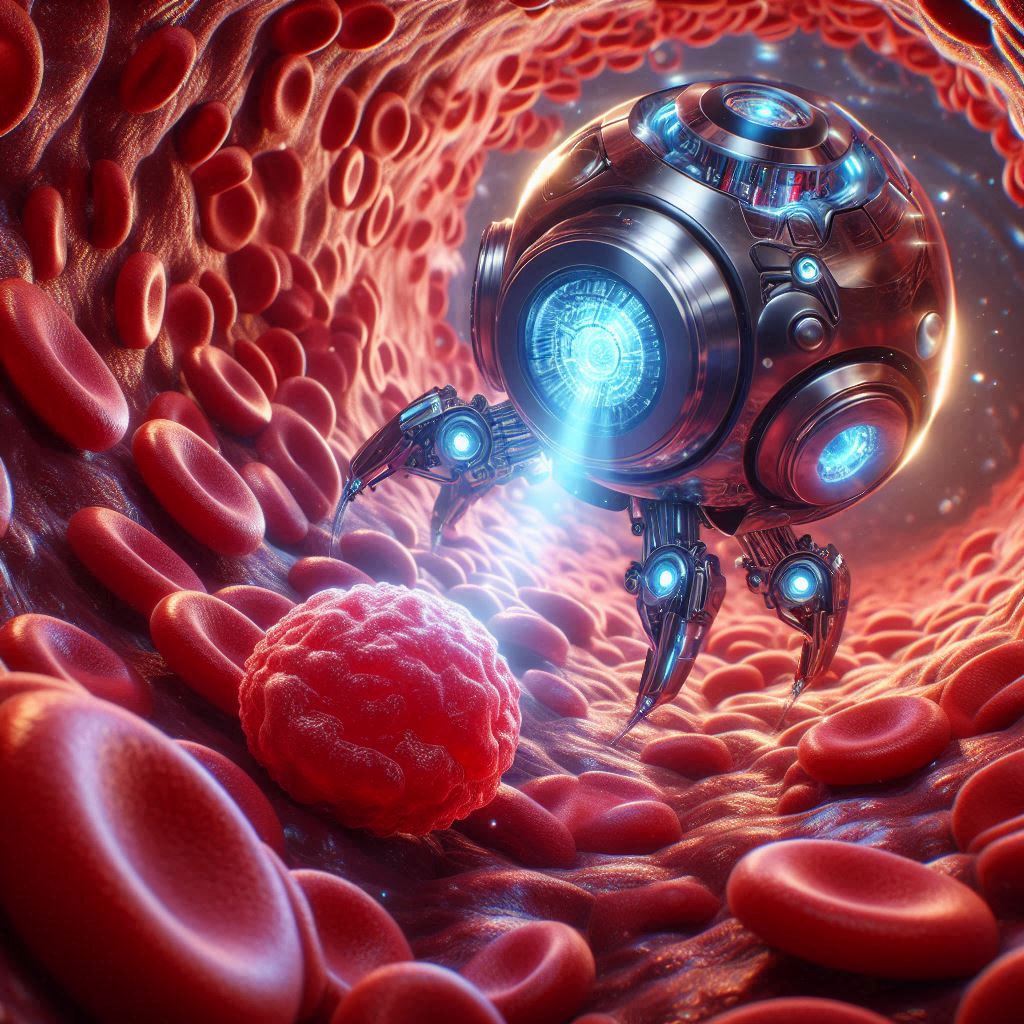
Medical Nanobots Technology is poised to fundamentally rewrite the rules of healthcare, shifting medicine from a reactive discipline to a precise, proactive engineering challenge. Unlike traditional pharmaceuticals that flood the entire body to treat a localized issue, nanorobotics promises the ability to diagnose, repair, and eradicate disease at the cellular level with surgical precision.
As we have explored in our previous analysis of Smart Dust Technology, the trend toward miniaturization is accelerating across all sectors. In medicine, this translates to programmable immunity—machines so small they can navigate the circulatory system, powered by principles similar to Energy Harvesting, to perform tasks that were previously impossible.
The Architecture of Medical Nanobots
A medical nanobot is not merely a shrunken robot; it is a complex molecular machine designed to operate in a fluid environment dominated by Brownian motion and viscous forces. These devices typically range from 0.1 to 10 micrometers in size and are constructed using biocompatible materials such as carbon nanotubes or DNA origami structures.
The core architecture consists of three main components: sensors for pathogen detection, propulsion systems for navigation against blood flow, and a payload delivery mechanism. Unlike passive nanoparticles used in current drug delivery, true nanobots possess rudimentary logic gates, allowing them to make autonomous decisions—such as releasing a drug only when a specific cancer marker is detected.
Targeted Drug Delivery: The End of Systemic Side Effects
The most immediate and transformative application of this technology lies in oncology. Chemotherapy, while effective, is often described as “carpet bombing” the body, damaging healthy cells alongside cancerous ones. Medical nanobots offer a “sniper” approach.
By coating the exterior of the nanobot with specific antigens or biomarkers, these machines can latch exclusively onto tumor cells. Once attached, they release their payload directly into the malignant tissue. This method drastically increases the therapeutic index of potent drugs, allowing for higher concentrations at the tumor site while virtually eliminating systemic side effects like nausea or hair loss.
Minimally Invasive Microsurgery
Beyond drug delivery, nanobots open the door to microsurgery performed from within the body. In cardiovascular health, mechanical nanobots are being designed to physically scour arterial plaque (atherosclerosis), restoring blood flow without the need for angioplasty or stents.
Furthermore, relying on advancements in Soft Robotics, these devices can navigate delicate tissues without causing trauma. They can repair damaged cell membranes, stitch micro-tears in blood vessels, or even serve as temporary scaffolding for tissue regeneration. This capability effectively turns the concept of “invasive surgery” into an outpatient injection procedure.
Overcoming the Power and Control Challenges
Despite the immense potential, the deployment of medical nanobots faces significant engineering hurdles, primarily regarding power sources and locomotion. Traditional batteries are impossible to scale down to the nanoscale.
Current research focuses on two primary solutions:
- Externally Actuated Systems: Using magnetic fields or ultrasonic waves to guide and power the bots from outside the body.
- Self-Powered Systems: Utilizing the body’s own chemistry, such as glucose or blood flow, to generate energy—a direct application of bio-compatible energy harvesting.
Additionally, “swarming” algorithms are essential. A single nanobot can do very little; millions must coordinate their actions to have a therapeutic effect. This requires sophisticated communication protocols similar to those seen in Swarm Robotics, ensuring the collective acts as a cohesive unit.
The Future of Medical Nanobots Technology
We are standing at the precipice of a new era where biology and engineering merge. The integration of AI with nanotechnology will eventually lead to “programmable immunity,” where a routine injection of nanobots could patrol our bodies, eliminating pathogens before symptoms even arise.
While regulatory hurdles and toxicity assessments remain, the trajectory is clear. Medical Nanobots Technology is not just about treating disease; it is about upgrading human biology to be more resilient, precise, and durable than nature ever intended.
Leave a Reply