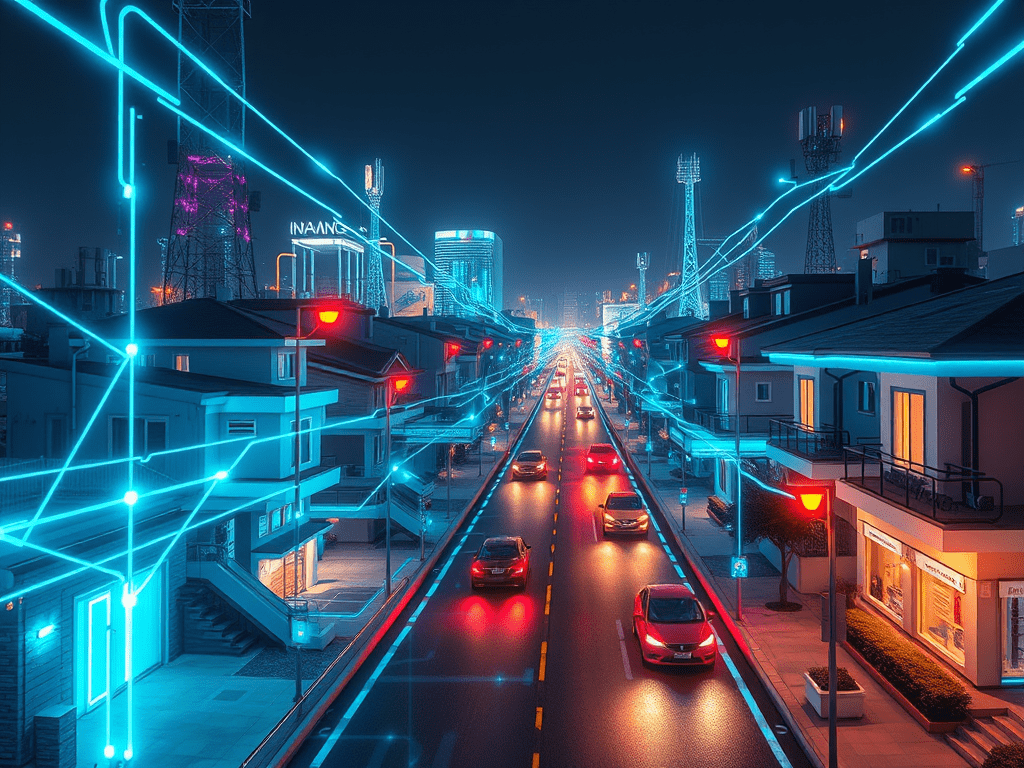
The “Airbnb” of Infrastructure: Why DePIN is the Trillion-Dollar Trend of 2026
Building physical infrastructure used to be a game for giants. If you wanted to build a telecom network, you needed billions of dollars and government permits to erect cell towers. If you wanted to map the world, you needed a fleet of cars like Google Street View.
DePIN (Decentralized Physical Infrastructure Networks) has flipped this model upside down. Instead of one company spending billions, millions of individuals spend a few hundred dollars to buy hardware, deploy it, and get paid.
It is the “Uber-ization” of Hardware. Here is why this model is beating the centralized giants in 2026.
1. The Economics: CapEx vs. OpEx
Why is DePIN winning? Simple economics.
- Centralized Telco: Must spend billions upfront (CapEx) to build towers before they sign up a single customer. It’s risky and slow.
- DePIN Protocol: Spends Zero on hardware.
- You buy the WiFi hotspot ($300).
- You put it in your window.
- You pay for the electricity.
The protocol pays you in tokens for providing the service. The network grows virally because the cost is distributed among the users. It scales 100x faster than any traditional corporation could.
2. Real World Use Cases (Not Just Hype)
In 2026, DePIN isn’t a theory; it’s a utility we use daily.
- Connectivity (The Helium Model): People deploy mini-cell towers in their homes. Together, they create a global 5G network that is cheaper and more resilient than AT&T or Verizon.
- Mapping (The Hivemapper Model): Dashcams in personal cars collect 4K street imagery. As seen on the Hivemapper Explorer, the map updates daily, whereas Google Maps might be 2 years old in rural areas.
- Compute (The Render Model): Designers rent idle GPU power from gamers to render 3D movies. It’s “AWS for the people.”
3. The “Flywheel” Effect
The magic of DePIN lies in its Token Incentives.
- Early Stage: The token rewards are high to encourage early adopters to buy hardware.
- Growth Stage: As the network grows, it becomes useful. Customers start paying to use the WiFi or Map data.
- Utility Stage: The revenue from customers is used to buy back and burn the token, increasing its value for the hardware owners.
It creates a self-sustaining economy where the users are also the shareholders.
💡 Analyst’s View: The Democratization of Revenue
For decades, we paid monthly bills to internet providers and cloud companies. It was a one-way street. DePIN turns these liabilities into assets. Your router, your car, and your gaming PC are now revenue-generating employees.
The investment thesis for 2026 is clear: Don’t just buy the token. Participate in the network. Be the infrastructure.
👇 Read More
🔗 6G in 2026: Why We Are Moving to the “Terahertz” Era (Click)
Leave a Reply