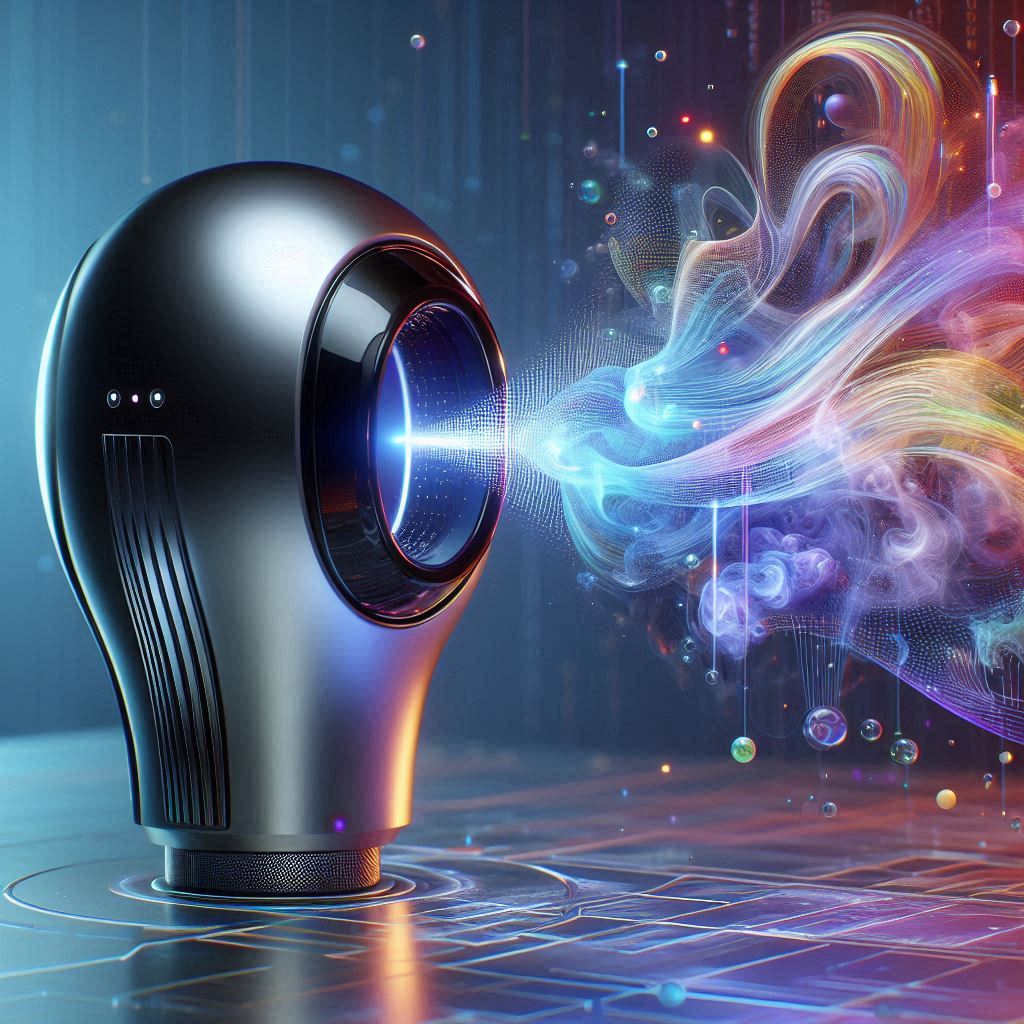
The digitization of human senses is nearly complete. Computers can see with cameras and hear with microphones, but for decades, the sense of smell remained analog. That is changing today. Digital Olfaction Technology is rapidly bridging this gap, allowing Artificial Intelligence to detect, analyze, and interpret scents with superhuman precision.
This is not just a novelty for the perfume industry. Digital Olfaction Technology is becoming a critical infrastructure layer in healthcare, advanced manufacturing, and global security. By combining biosensors with machine learning, we are moving from a world where we simply look at data to one where we can physically “smell” the condition of our environment.
Here is a comprehensive deep dive into how this technology works, why it matters, and where it is heading.
The Science Behind the “Electronic Nose”
To understand Digital Olfaction Technology, we first need to look at biology. When we smell coffee, volatile organic compounds (VOCs) bind to receptors in our nose, sending electrical signals to the brain. The brain then recognizes the pattern as “coffee.”
Electronic Noses (E-Noses) function on the exact same principle but use hardware instead of biological cells.
- Air Intake: The device draws in air containing odor molecules.
- Sensor Array: A grid of chemical sensors (often Metal-Oxide-Semiconductor or conducting polymers) reacts to the VOCs.
- Pattern Recognition: The reaction creates a digital fingerprint. AI algorithms analyze this data against a massive library of known scents.
Unlike a human nose, which gets tired (olfactory fatigue) and is subjective, an E-Nose provides consistent, objective data 24/7. This reliability is why industries are rushing to adopt Digital Olfaction Technology.
Revolutionizing Food Safety and Supply Chains
One of the most immediate applications is in the food and beverage industry. Currently, food quality testing often relies on expiration dates (which are estimates) or human spot-checking. This is inefficient and leads to massive waste.
With Digital Olfaction Technology, sensors can be embedded directly into storage containers or smart refrigerators.
- Early Spoilage Detection: As food decays, it releases specific gases like ethylene or ammonia. Sensors can detect these invisible chemical shifts days before a human can smell rot, preventing food poisoning and reducing waste.
- Consistency Control: For coffee roasters or wineries, maintaining a consistent flavor profile is crucial. E-Noses can analyze batches to ensure they meet the exact chemical signature of the brand’s standard, removing human error from the quality control process.
Healthcare: The Breath of Life
Perhaps the most life-changing application of Digital Olfaction Technology lies in medical diagnostics. The human body releases hundreds of VOCs through breath, sweat, and urine. These chemical signatures change when we are sick.
Research is currently underway to use AI-powered breathalyzers to detect serious conditions non-invasively:
- Cancer Screening: Certain lung and stomach cancers alter the metabolic processes in the body, releasing specific biomarkers in breath. E-Noses can potentially diagnose these at early stages.
- Diabetes Management: Instead of painful finger pricks, patients could simply breathe into a sensor that detects acetone levels, which correlate with blood glucose.
- Infection Control: In hospitals, “smelling” bacteria like MRSA or C. diff rapidly can prevent outbreaks more effectively than waiting for culture results.
For a deeper understanding of the sensors enabling these medical breakthroughs, you can refer to the research on gas sensors published by IEEE Spectrum.
Enhancing Security and Public Safety
In the security sector, dogs are currently the gold standard for detecting explosives or narcotics. However, dogs require training, rest, and handlers. Digital Olfaction Technology offers a scalable, automated alternative.
- Airport Security: Mass spectrometers are already used, but they are slow. Next-gen E-Noses can sniff passengers or luggage in real-time as they walk through a tunnel, detecting trace amounts of hazardous materials without stopping the flow of people.
- Smart City Monitoring: Cities are deploying these sensors to monitor air quality at a granular level. They can instantly detect gas leaks in pipelines, sewage issues, or sudden spikes in toxic industrial pollutants, alerting authorities before a disaster occurs.
The Challenges of Digitizing Scent
Despite the progress, Digital Olfaction Technology faces significant hurdles. The primary challenge is complexity. A single scent can be composed of thousands of different molecules mixed in varying ratios. Teaching an AI to distinguish between “fresh strawberries” and “strawberry shampoo” requires massive datasets and sophisticated neural networks.
Furthermore, environmental factors like humidity and temperature can interfere with sensor accuracy. However, advancements in MEMS (Micro-Electro-Mechanical Systems) and Neuromorphic computing are rapidly solving these latency and accuracy issues.
Conclusion: A New Dimension of Data
We are standing on the brink of a sensory revolution. Just as cameras gave computers eyes, Digital Olfaction Technology is giving them a nose. This adds a completely new dimension of data—scent data—to the digital economy.
From preventing a gallon of milk from spoiling to diagnosing a disease before symptoms appear, the impact of this technology will be invisible but omnipresent. As sensors become smaller and algorithms get smarter, our devices won’t just tell us what they see; they will tell us what they smell.
[Read More] Neuromorphic Computing: The Chip That Thinks Like a Brain